
Autumn 1813: How the Boka Freed Itself from the French
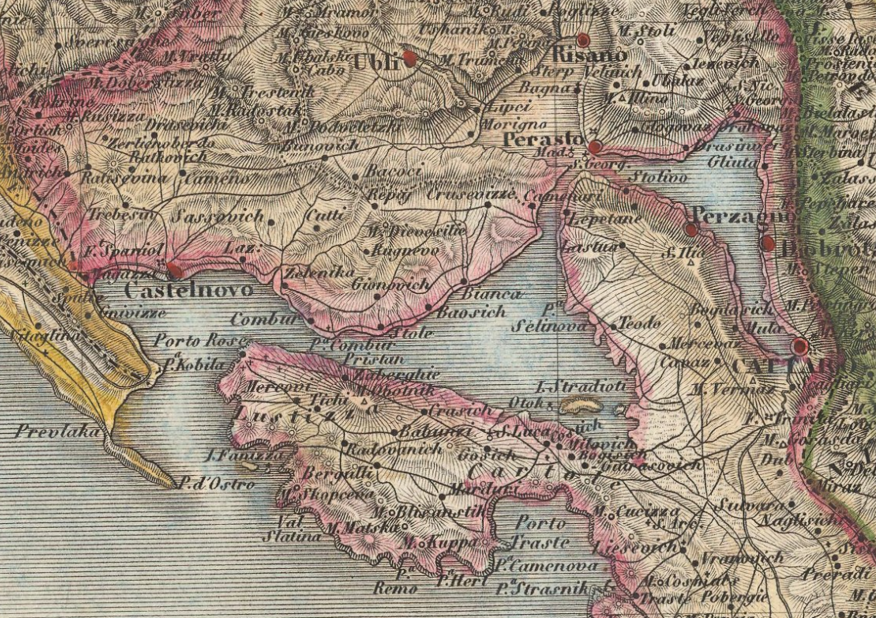
October 1813. A frigate, a brig, three Sicilian gunboats and some fifty soldiers sailed into the Bay of Kotor — far too few to take even a single fortress. Yet in four days, from 13 to 16 October, St George Island off Perast, Herceg Novi and the Španjola fort all surrendered. It was not their guns that won it for the British: on land the Montenegrins and the insurgent Bokelji were already waiting, and the French garrisons had no wish to fight.
A little background
In 1796 Petar I, Metropolitan and ruler of Montenegro, defeated the Ottoman pasha of Shkodra, Mahmud Bushati, at the battles of Martinići and Krusi, united Montenegro with the neighbouring Brda, and for the first time sensed that his state could grow. A mountain land without a port depended on foreign merchants and foreign goodwill. In 1799 Petar I openly asked Russia to restore to Montenegro the lands Venice had once taken from it, from Pobori and Maine to Grbalj and the Boka Kotorska itself, and to place them under Russian protection.
Montenegro and the Boka had long been bound together: by a shared faith with the Orthodox Bokelji, by trade, by kinship, by a common struggle against the Turks. After the fall of Venice in May 1797 the bay was left without any government for several months: some inhabitants mourned Venice, others waited for Austria, others again called on the Montenegrin vladika, and Budva even placed itself under his protection for a month and a half. That summer the Austrians arrived, and in October 1797 the Treaty of Campo Formio gave the whole Boka to Austria.
But the bay remained small change in the dealings of the great powers. Under the Peace of Pressburg at the end of December 1805, Austria ceded Dalmatia and the Boka to Napoleon.
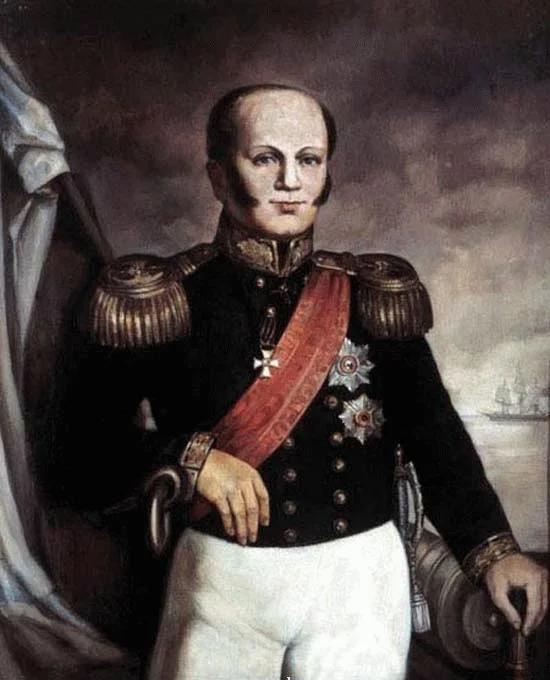
In early 1806 Admiral Senyavin’s Russian squadron, together with the Montenegrins, occupied the Boka and the coast from Budva to the approaches of Dubrovnik, and held it for about a year and a half. During those months Petar I drew up a plan for a “Slavo-Serbian” state with its capital in Dubrovnik and prepared a campaign into Herzegovina. But Russia was then at war both with France (in alliance with Prussia) and with Turkey. After the defeat at Friedland in the summer of 1807 she made the Peace of Tilsit with Napoleon: the Russians were to leave the Adriatic and hand the Boka over to the French. The French entered the Boka on 12 August.
Six years under the French
The Bokelji long remembered their six years of French rule. The Boka’s merchant fleet, which in 1805 numbered some 400 vessels and about 3,000 seamen, was ruined by war and piracy. The authorities imposed heavy taxes and levies, and from November 1807 they pressed seamen into the navy. In Grbalj the villagers killed Knez Bojković, who had been helping the French with the levy. The communities of Brajići, Pobori, Maine and Paštrovići refused to supply men and left officials’ letters unanswered. In 1811 a Bokelj deputation complained of “intolerable burdens” to Bertrand, the new French Governor-General of the Illyrian Provinces. Even the Catholic clergy, to whom the French had promised freedom of worship, were for the most part hostile to them.
By 1813 French rule in the bay was hanging by a thread. Seeing this, Petar I himself turned to the British for help. On 20 April 1813 Rear-Admiral Fremantle, commanding the British fleet in the Adriatic, wrote to the Montenegrin vladika that he valued the zeal of his people, but at present had no supplies for joint operations, and asked him to wait. The wait lasted until the autumn.
Once again, high politics shaped events in the region. After Napoleon’s catastrophe in Russia a new coalition formed against him, and Britain, whose fleet held the Adriatic, paid Russia and Prussia to fight the war on land: the treaties were signed in June 1813 at Reichenbach in Silesia. There, on 27 June, Russia, Prussia and Austria agreed to return the Illyrian Provinces, the Boka among them, to Austria, and at Teplitz on 9 September they agreed to restore Austria to frontiers close to those of 1805, when the bay had still been Austrian. Both documents bear Russia’s signature, and in the spring of 1814 this would make itself felt, despite everything that happened in between.
A garrison that would not fight
Petar I decided to act in September, when Austria had been at war with France for a month but her troops were still far away. Historians believe the calculation was this: if the Montenegrins and the Bokelji liberated the bay themselves and proclaimed union, the powers would have to reckon with it.
“…the seventh year has now come since the French covered the Bokelj province, and from the very beginning they threatened us dreadfully that our fatherland would henceforth be called not the Black but the Red Mountain — that is, a Mountain drenched in our blood”
from Petar I’s proclamation
And the proclamation ended with an open call to arms:
“Make ready, then, ye heroes, with your natural spirit of courage, for this knightly deed, that, calling on God for help, we may enter the Bokelj province as soon as may be under the victorious banner of the great Alexander, our gracious protector.”
from Petar I’s proclamation
The agreement, sealed with an oath “by the Mother of God and Saint Spyridon”, even provided for this very case: should the Russian Tsar order the vladika to make war on the French, he was to warn the general two months in advance.
According to the Russian historian Alexander Popov, who visited Montenegro in the 1840s, it was led by the gubernadur Vukolaj Radonjić; according to Gauthier’s diary, by the vladika’s brother Savo Petrović. The vladika halted at the Podmaine monastery and from there called on the elders of Grbalj to march with the Montenegrins.
Popov describes how this was arranged. At a council below Maine, on the proposal of Petar Đurašković, the Montenegrins wrote to the pandurs of Budva — the local armed guard which under the French served as police and collected taxes — asking them to attack the garrison next morning and open the gates, and promising to come to their aid. The pandurs agreed, and the next day Budva was taken. Gauthier confirms it: on that day the townspeople and the pandurs of Budva rose in revolt.
The French commander of the Boka, General Gauthier, sat in Kotor reading with growing alarm the reports on the state of his troops. The garrisons were made up mainly of Croats from the Ogulin regiment. They had not seen their pay for three months. On 20 September the soldiers in Herceg Novi mutinied, on 27 September 82 men deserted, and the fourth company, sent from Dubrovnik as reinforcement, went off to a man. On 30 September the Montenegrins entered Risan, and on 1 October Montenegrins and Bokelji took the port of Rose. By mid-October some three hundred men remained in Herceg Novi, none of them intending to die for France.
It is worth explaining how the Croats came to be on the French side. The Ogulin regiment belonged to the Military Frontier, a belt along the Ottoman border where for centuries peasants had held their land in return for military service and answered not to the local authorities but to Vienna. These “Grenzer” soldiers swore allegiance to the Austrian emperor and had served him for generations.
In the spring of 1809 Austria went to war with France once more. For Vienna it ended badly: under the Treaty of Schönbrunn of 14 October 1809, defeated Austria ceded to Napoleon the lands south of the Sava, and with them the Karlovac Frontier with its Ogulin, Lika, Otočac and Slunj regiments. The regiments were not disbanded: they were transferred to French command as “Military Croatia” within the Illyrian Provinces, kept in garrisons on the Adriatic, and in 1812 marched into Russia. The Grenzer had no choice in the matter: they passed to France together with their land.
Everything changed in August 1813, when Austria again declared war on France and her troops entered the northern Illyrian lands. Now the French were asking the Croats to fight against the very emperor their fathers had served. Add to this months without pay, and it becomes clear why the Ogulin men mutinied and deserted, and were ready to surrender the moment the Austrian flag was raised over a fortress. Austrian soldiers were still far from the Boka, but the flag itself was already appearing in the bay: in early October two longboats entered the port of Rose under it, and in mid-October the Bokelji and the British were hoisting it over captured vessels and forts.
A frigate, a brig and three Sicilian boats
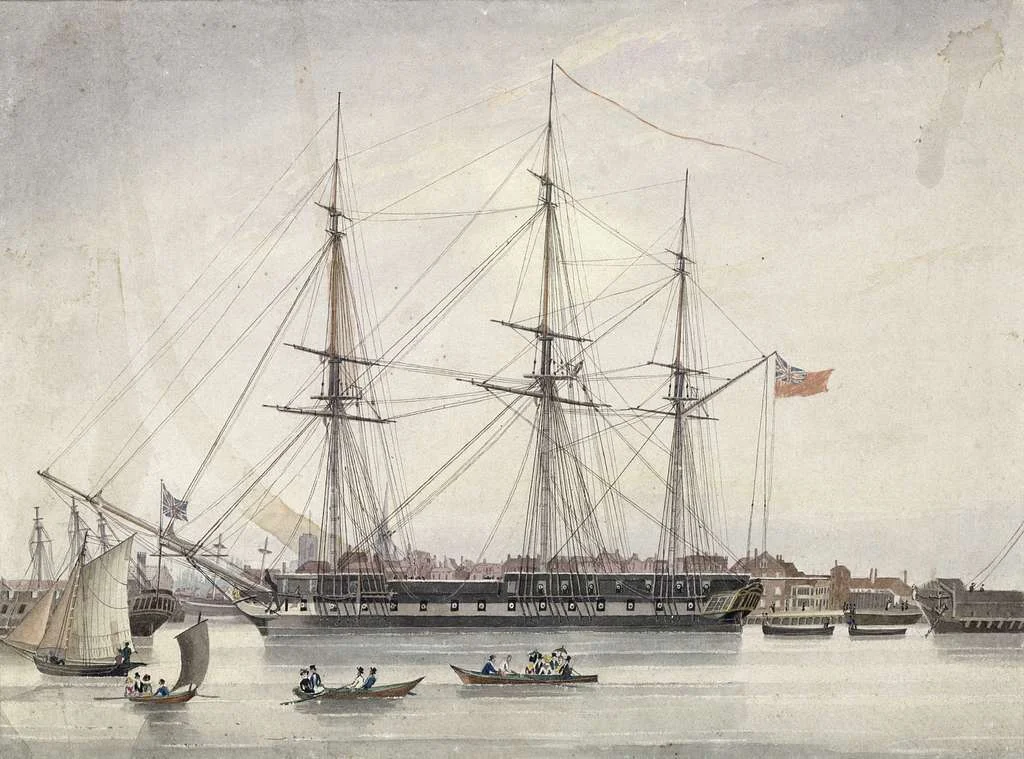
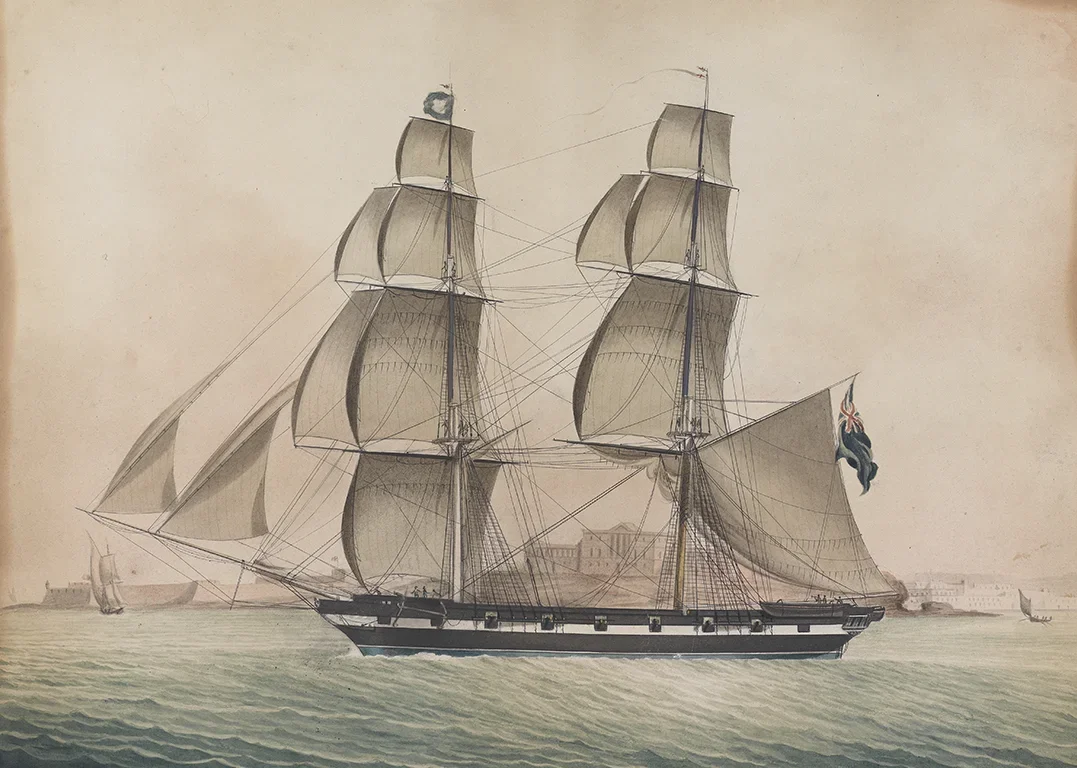
The “British fleet” of autumn 1813 was more modest than it sounds. Captain William Hoste, who in 1811 had defeated a Franco-Venetian squadron off the island of Vis (Lissa), commanded the 38-gun frigate HMS Bacchante (1811). Alongside her was the 18-gun brig HMS Saracen (1812) under Captain John Harper, which had spent the whole summer blockading Ragusa and the mouth of the bay. There were also three Sicilian gunboats carrying about 50 soldiers from the Korčula garrison under a British army captain.
Harper had already shown what he could do. On 18 August, with the brig HMS Weazle and ships’ boats, he destroyed two French batteries at the mouth of the bay, at Kobila and on Luštica. The date is confirmed both by his own report and by Gauthier’s diary. From that day the entrance to the Boka lay open to the British; all that remained was to choose the moment.
On 12 October Hoste arrived off Ragusa and joined Harper. On the morning of 13 October the squadron forced its way between Herceg Novi and the fort of Rose and, after a brief exchange of fire, anchored three miles above the town (roughly off Kumbor). The British ships now lay deep inside the bay of Herceg Novi.
The night of 13–14 October
That same day the Bokelji made a move of their own. Luković of Prčanj and Kamenarović of Dobrota, who commanded French rowing boats (péniches), went over to the insurgents and helped their countrymen seize two gunboats together with the flotilla commander, Latreyte. The gunboats had been sent to fetch guns from St George Island: Gauthier wanted them for the walls of Kotor. At four in the afternoon the men of Perast, led by Vicko Krilović, commander of a National Guard battalion, took the fortress of the Holy Cross (Sveti Krst). A Croatian sergeant tried to shut the gate, but Krilović killed him.
At ten in the evening Harper, with Bacchante’s boats, two Sicilian gunboats and Saracen’s boats, set off up the bay towards Kotor. He was fired on from St George Island, but not a single shot struck home. At midnight, four miles from Kotor, he came upon four French gunboats. Their crews, 136 men including 24 soldiers, had mutinied and surrendered the boats without a fight. Each carried a long 24-pounder, being brought up for the defence of Kotor. The British naval historian William James adds that Harper at once landed and summoned the inhabitants, who “armed en masse against the French”, and that the English and Austrian flags were hoisted on the captured gunboats.
At dawn Harper landed at Perast, where the inhabitants had already taken the Holy Cross fortress. At six in the morning he opened fire on St George Island with its monastery and battery. Fifteen minutes later the commandant asked to capitulate. Harper demanded unconditional surrender and gave him five minutes to decide. The garrison laid down its arms. The British suffered no losses. Hoste’s own journal adds two details: by the time the boats arrived the French gunboats were already “in the possession of the Bocchese”, and the Croats of the island garrison had threatened to kill their French commandant if he did not surrender. Gauthier gives the reason: the Croats had seen the Austrian flag over the fortress of Perast.
Harper’s report lists the spoils. On the island he took a captain-commandant, a captain of engineers, two lieutenants and 120 rank and file, together with six heavy guns, several light ones, a mortar and 66 barrels of powder.
Two days and two nights
The hardest nuts to crack were the town defences of Herceg Novi and the Španjola fort. The assault began on 14 October and, in the words of the Montenegrin historian Pavičević, lasted two days and two nights. The Abbé Brunazzi, an Austrian agent (he worked for Archduke Francis d’Este, who was preparing the Boka’s return to Viennese rule), crept up to the fortress walls at night with proclamations for the Croats of the Ogulin regiment, urging them to go over to the Austrian flag. On 15 October the commandant of Španjola, Kosanović, an officer of the same Ogulin regiment, answered him in writing: “I am bound to defend myself to the last drop of blood, but I will not fire a single shot against my father and beloved sovereign of Austria; I will surrender and open the gates… when I see his flag and a parlementaire.” Formally Kosanović served France, but the sovereign he regarded as his own was the Austrian Emperor Francis I.
On 16 October Hoste sent a short report from Bacchante, lying off Herceg Novi: the town and Fort Španjola had surrendered to the British force. Town and fort together held a garrison of 299 men, 25 guns and seven swivels. In only three days, counting St George Island, 34 guns and 438 prisoners had fallen into Allied hands. Hoste meant to send the Croats willing to serve Austria to Fiume, but in the end landed them at Split on 1 November.
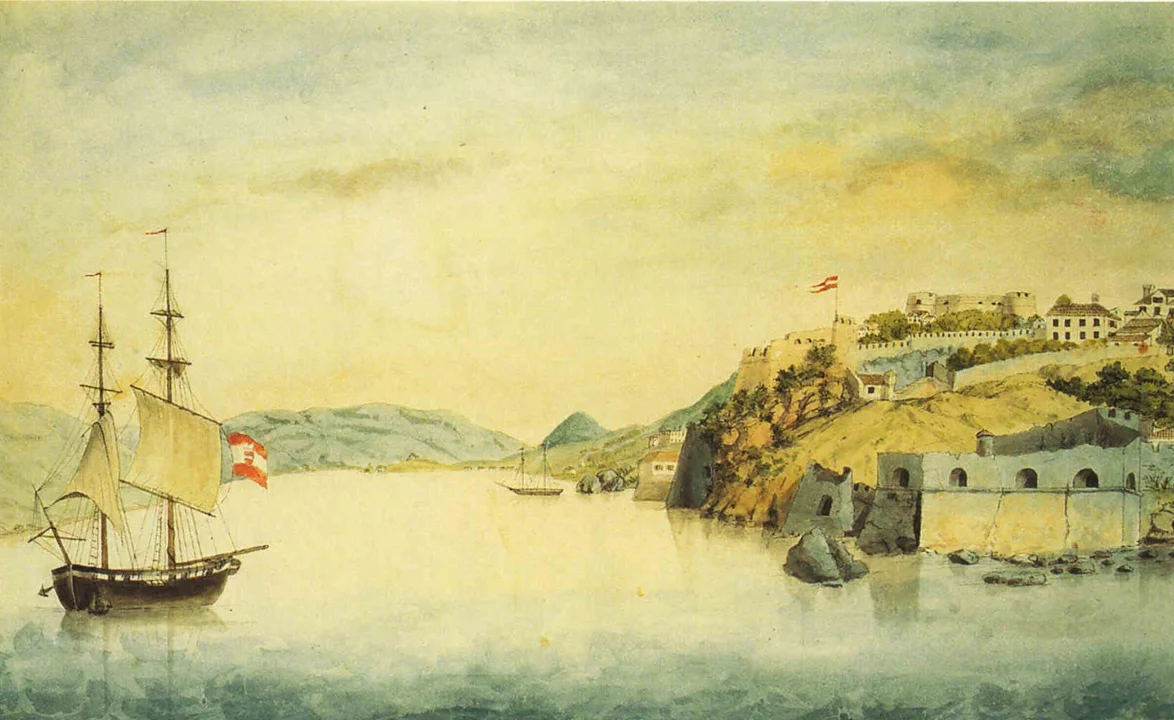
Bacchante’s journal, published together with Hoste’s letters, fills in the picture. By the time the squadron arrived, the Bokelji had already surrounded Herceg Novi and Španjola, and the Montenegrins Kotor. The fort held “about two hundred and fifty Croats, and not more than twenty-six Frenchmen”. At the request of one of the Montenegrin chiefs, the Russian flag was added to the British and Austrian ones over the captured forts: as the journal’s author put it, the Bokelji were attached to Austria and the Montenegrins to Russia, and the British did not want to alienate either.
The British themselves did not stay long in the town. In early November the head of Herceg Novi, Vaso Đurasović, wrote to the vladika that the British had taken four bronze cannon from Španjola, carried them down to the lower town and were sawing them up. Their commander was leaving with his soldiers and keeping only a guard, which “our people will hold”. A small British post nevertheless remained in the town and forts into mid-November.
Brunazzi and Hoste
The Abbé Brunazzi turns up constantly in this story, and always where he is least wanted. He had come from Vis on behalf of Archduke Francis d’Este to prepare the Austrians’ entry into the Boka. In practice, in October he worked for the British: his proclamations did more to the Croats than cannon. A few days after the victory, no one was standing on ceremony with him any longer.
St George Island commanded the passage to Kotor, and Hoste did not want to leave it in his rear. He dismantled the battery and took the guns aboard the frigate. The Bokelji were offended: in their view, the island had surrendered to them. On 23 October Hoste replied to the community of Perast, which had asked for the guns to be left for the defence of the country. The next day the vladika made the same request, and Hoste gave way. On 24 October he promised Petar I the guns would be returned, and of the Abbé he wrote briefly: “The Abbate Brounazzi has done much harm.” In the same letter he reported that Kotor was closely invested in any case, and that the British troops were being withdrawn from Herceg Novi and Španjola.
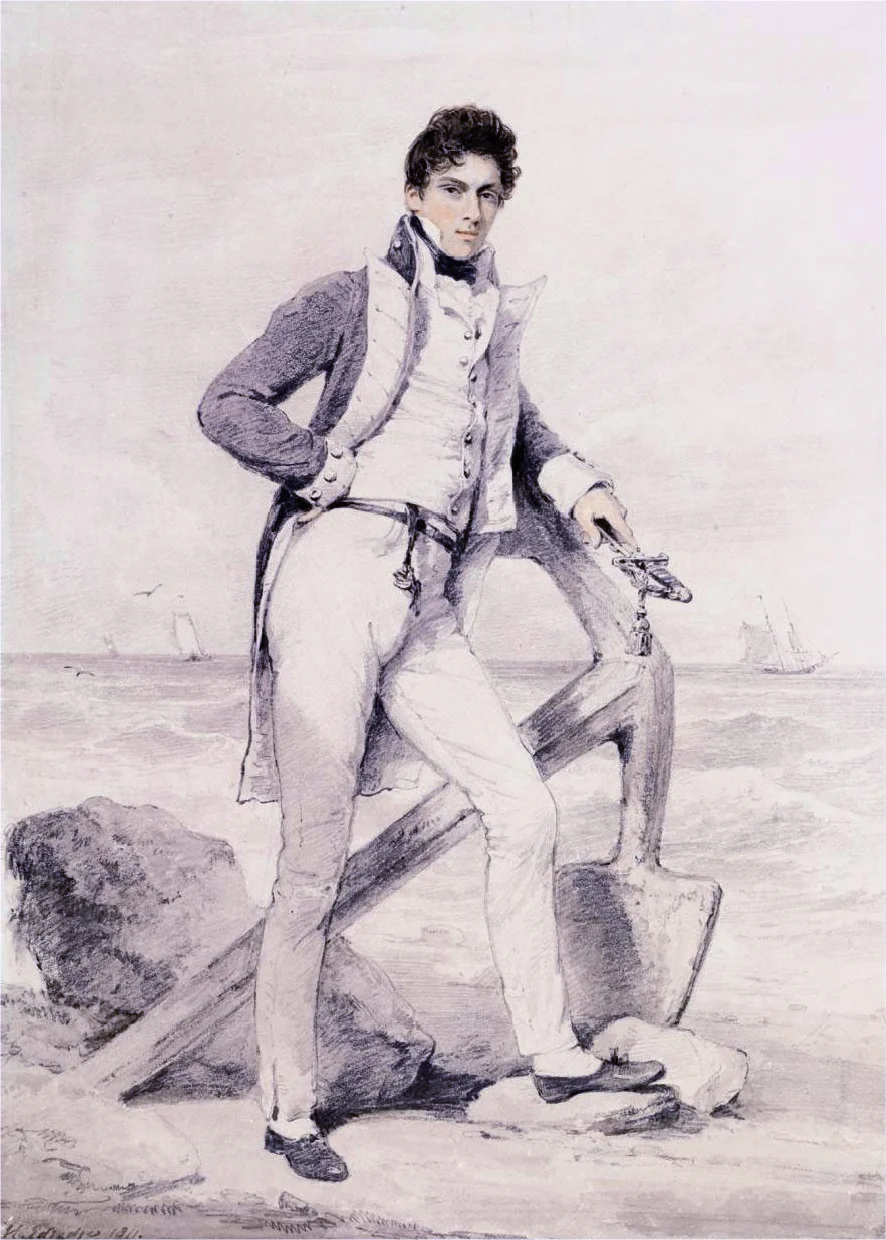
By 29 October the squadron was already off Dubrovnik. The journal printed in the second volume of Hoste’s Memoirs and Letters (published by his widow in 1833) puts it this way: “We have quitted Cattaro rather in disgust.” The Bokelji had “convened a sort of congress” and sent Hoste “a very impertinent letter”, put up to it, in the writer’s view, by Brunazzi, “an intriguing, self-sufficient priest”. And the journal concludes: “It is not in this extremity of Europe that the great game is playing, but in Germany, and on the Rhine.”
Gauthier, shut up in Kotor, held out for another two and a half months. His siege diary, which he sent to the Minister of War with his report of 6 April 1814, is written drily, day by day. On 20 October the brig Saracen anchored off Dobrota, across the water from the town. On 22 October Harper himself brought by boat Hoste’s letter demanding the town’s surrender, and Gauthier refused. That same day he sent 150 Croats out through the gates to burn the houses under the walls and kill a few Montenegrins and Bokelji, so that afterwards, fearing revenge, they would not dare go over to them. In the skirmish three Montenegrins were killed, and Filip Bogdanović, brother of the gubernadur (the vladika’s secular co-ruler), was mortally wounded.
The scheme backfired. On 28 October the Croats, who had gone unpaid for three months, mutinied, killed an officer named Siani and seized the keys to the gates. Gauthier, with his gendarmes, gunners and Italians, shut himself up in the fortress of St John (San Giovanni) on the mountain above the town, and in the night the Croats left Kotor. They went not to the Montenegrins but to the Abbé Brunazzi, and handed him the keys to the town gates. According to the French historian Pisani, as retold by the Serbian historian Vladan Đorđević, Brunazzi packed the Croats off to Dubrovnik without telling the vladika, although he was at Dobrota, half an hour’s walk from Kotor. “And so Kotor, left undefended for twelve hours, slipped through the Montenegrins’ fingers.” From then on, writes Đorđević, the vladika loathed the Abbé. In the morning Gauthier saw the Montenegrins calmly building their batteries as if nothing had happened, came down from the fortress and barricaded the gates again. The sources disagree on how many men fled: from 256 soldiers with four officers in Montenegrin accounts to 350 in Pisani and 382 in Brunazzi.
Dobrota, 10 November
The main event of the autumn took place not on a battlefield but at a table, in the private house of Vaso Lukin Ivanović in Dobrota. There, on 10 November New Style (29 October Old Style, the date on the act itself), representatives of the communities of the bay and of Montenegro assembled. A couple of kilometres away, behind the walls of Kotor, Gauthier still held out with his garrison, and at night there was firing around the town. The assembly proclaimed the union of Montenegro and the Boka Kotorska under the rule of Vladika Petar I and set up a Central Commission of nine Bokelji and nine Montenegrins. Among the signatories was the head of the Herceg Novi community, Vaso Đurasović.
The act placed the united provinces under the protection of three powers — Russia, Austria and Britain — and left them broad autonomy. It did not proclaim full independence: the parties intended to claim it only if their protector proved unable to hold power. In other words, the authors of the act were counting on the victors accepting an accomplished fact.
On 20 November the vladika sent the Montenegrin serdar Savo Plamenac to the Russian Tsar Alexander I to ask for his protection. But the position of Montenegro and the Boka remained precarious: on 20 December the Austrian general Todor Milutinović, ignoring the vladika’s letters, advanced on Herceg Novi, met resistance and withdrew, only to return in January.
How it all ended
On 12 December Bacchante again moved up the bay, and on the 14th British sailors began hauling guns up Mount St Theodore, that is, Vrmac above Kotor. Gauthier thought it impossible; Hoste wrote to his mother that “the French general said he would give me six months to get one gun up: I have convinced him of the contrary in six days.” He had, he said, “no assistance but from a few Montenegrins”. On 25 December all the batteries opened fire. On 4 January Gauthier asked for a ceasefire, the capitulation was signed on the 6th, and on 9 January the general and 297 of his men were embarked. Hoste left the keys of the town “in the hands of the chief civil magistrate”. On 16 January the town was handed over to the Central Commission, and on the 17th the vladika entered Kotor. By summer the whole Boka was in Austrian hands: they entered Herceg Novi at the end of May or the beginning of June (the sources differ), and Kotor on 11 June, after a capitulation signed the day before at Prčanj; the Congress of Vienna confirmed it in 1815.
Allies with different aims
Formally, Britain, Austria and Montenegro were fighting on the same side, against Napoleon. But in the Boka each had its own goal. Britain wanted the French out of the Adriatic; Austria wanted back the bay she had held in 1797–1805; Montenegro wanted, at last, access to the sea.
Britain and Austria were allies in the wider war, and London recognised the Reichenbach and Teplitz agreements, which gave the Illyrian Provinces, and the Boka with them, back to Austria. On the spot things looked very different. The British had a fleet but almost no soldiers, while the Austrian army never appeared in the bay at all: throughout October it was represented by the Abbé Brunazzi alone. Hoste wrote with irritation that during the whole of these events “not an Austrian soldier had made his appearance”. So it was the Montenegrins and Bokelji who gave the British their land force. As early as 20 November 1813 the British ambassador at the Court of Vienna, Lord Aberdeen, passed on to Admiral Fremantle the Austrian emperor’s wish “to employ as little as possible” the help of the Montenegrins. Hoste later protested that they “were never employed by me in any way whatever”: he had found them before the fortresses on his arrival and was glad of any help. Britain made Montenegro no political promises. Hoste did tell the Bokelji in his proclamation that they would be “what you ever ought to have been, a free and independent people”. But those were a captain’s words, not London’s policy, and by 25 November he had announced that he would not interfere in the internal affairs of the country.
Relations were sharpest between Montenegro and Austria: both were at war with France, and both wanted the same Boka. Brunazzi had explicit instructions to prevent the vladika from taking the fortresses himself and to win the bay’s Croats and Catholics over to Vienna. In January 1814 General Milutinović came to Herceg Novi with 700 soldiers, but the Montenegrins shut the gates, and the vladika warned that he had occupied the Boka in the name of the Russian Tsar and could not hold back his men if the Austrians advanced further. On 13 January Milutinović withdrew towards Dubrovnik.
Two months later Milutinović tried again. Dabović, a retired Austrian major living at Prčanj, and Count Visković of Perast promised him that two thousand Catholic Bokelji would meet him at Herceg Novi. On 16 March the general arrived before the town with six companies of Grenzer, but found not a single one of the promised supporters — instead, as Đorđević writes, “all the heights were swarming with Montenegrins”. The defence of Herceg Novi in these months was led by a Russian officer, Colonel Nikitić, whom the vladika styled “commander of the Montenegrin and Kotor forces at Castelnuovo”. The Russian flag flew over the fortresses. Nikitić convinced Milutinović that few people had invited him and that a fight would turn into a massacre, and the Austrians withdrew again. The vladika wrote to the Russian envoy in Vienna that it was Nikitić who, “by the firmness of his spirit and his composure”, had averted disaster, and asked that Vienna forbid its generals such “attempts by force” until the powers had reached a decision.
Hoste himself explained his decision to Lord Aberdeen in a letter of 10 January 1814: had he let the Austrians into Kotor, he would have “offended the Russian flag”; had he let in the vladika, Austria would have complained — so the keys stayed with the civil authorities. Aberdeen replied from Châtillon on 23 February, regretting that Hoste had used the Montenegrins “so largely”, and reminding him that the British fleet was fighting not only to drive out the French but to restore these lands to the Austrian emperor. Hoste retorted that the Austrians had only themselves to blame: “it is entirely their own fault that the Austrians are not at this moment quiet possessors of the province of Cattaro.”
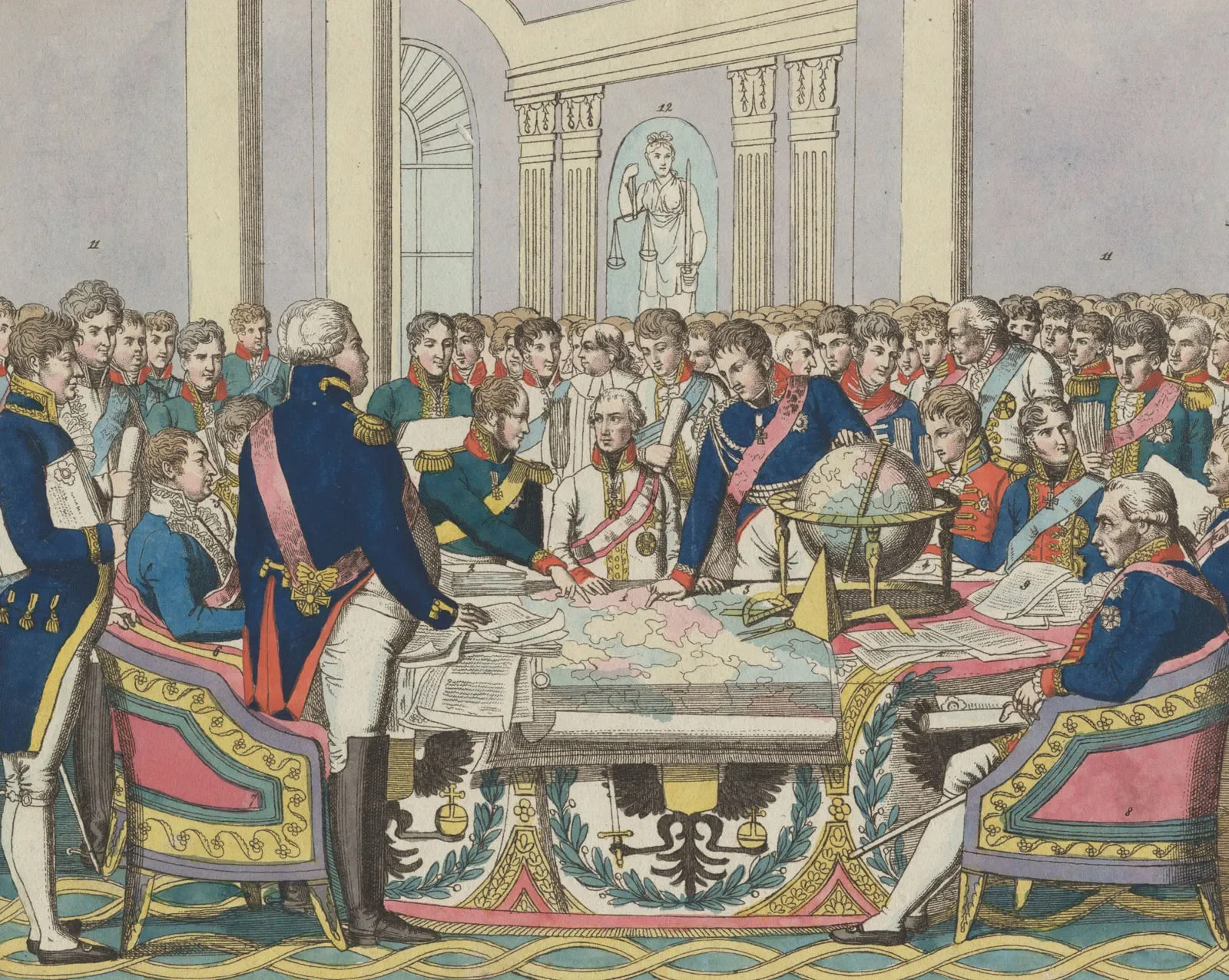
In the end it was decided by diplomacy, not arms. The Austrian Foreign Minister Metternich asked St Petersburg to bring its influence to bear on the vladika, and Montenegro depended on Russia, not least for money. Petar I’s envoy to the Tsar achieved nothing, and in May 1814 Alexander I informed the Metropolitan that the Allies were giving the bay to Austria. The fighting had been done mostly by Montenegrins and Bokelji with the support of the British fleet; the prize went to Austria; and Russia, bound by the agreements signed at Reichenbach and Teplitz, took Austria’s side. Montenegro was the only participant with no voice at the table of the powers.
Sources
- Marshall J. Royal Naval Biography, entries “Hoste, William” and “Harper, John” — Harper’s reports of 18 August and 14 October 1813 and Hoste’s of 16 October 1813 and 5 January 1814; the primary source for the day-by-day dates of 12–16 October and the list of spoils (34 guns, 438 prisoners); text on Wikisource.
- Hoste W. Memoirs and Letters of Capt. Sir William Hoste, ed. by Lady Harriet Hoste. London: Bentley, 1833, vol. II, pp. 186–241 — journal and letters, October 1813 – March 1814: the taking of Herceg Novi, the verdict on Brunazzi, the siege of Kotor, correspondence with Lord Aberdeen; proclamation to the Bocchese (pp. 194–196), letters to the community of Perast and to the vladika, 23–24 October (pp. 197–205), manifesto of non-interference, 25 November (pp. 213–214), entries on leaving “in disgust” and the “great game” (pp. 207–209). archive.org: memoirsandlette00hostgoog; HathiTrust: hvd.32044094424454.
- James W. The Naval History of Great Britain. New ed. London: Bentley, 1837, vol. VI, pp. 180–181, 267 — the British account: the night of 13–14 October, the flags on the gunboats, the capitulation of Kotor on 6 January 1814.
- Mijušković S. Dnevnik generala Gotjea o opsadi Kotora // Istorijski zapisi, 1962, no. 1, pp. 75–91 — the French view; Gauthier’s day-by-day siege diary (5 August 1813 – 6 April 1814), sent to the Minister of War with a letter of 6 April 1814.
- Berić D. P. Djelatnost abata Jakova Brunacija za prisajedinjenje Boke Kotorske Austriji 1813 // Istorijski zapisi, 1950, nos. 10–12, pp. 382–393 — summary of Brunazzi’s report; Kosanović’s letter (checked), Hoste’s verdict on Brunazzi, Brunazzi’s instructions, Milutinović at Herceg Novi in January 1814.
- Hrabak B. Herceg-Novi u doba propasti Mletačke republike i Napoleonovih ratova // Boka, 23 (2003) — garrison strength and the course of November in Herceg Novi; the dates “12/25 October” do not match the calendar and need checking.
- Zloković M. Herceg-Novi od pada Mletačke Republike do Bečkog kongresa (1797–1815) // Boka, 4 (1972) — number of guns, general background.
- Mijušković S. „Centralna komisija“ — zajednička vlada Crne Gore i Boke // Boka, 11 (1979), pp. 267–277 — text of the Dobrota act; the publication mixes the two calendars.
- Bojović J. Ujedinjenje Crne Gore i Boke Kotorske 1813. godine // Istorijski zapisi, 1983, nos. 3–4, pp. 69–76 — the union, the number of Croats who left, correspondence with Fremantle in spring 1813 and his help in September.
- Pavičević B. Sazdanje crnogorske nacionalne države (chapters on Petar I), Montenegrina — chronology of September–October.
- Pavičević B. Crna Gora i Boka Kotorska od požunskog do tilzitskog mira 1805–1807 // Istorijski zapisi, 1985, nos. 3–4; Raspopović R. Istočna obala Jadrana od mira u Kampoformiju do Bečkog kongresa // Istorijski zapisi, 2016, nos. 1–2 — causes, Reichenbach and Teplitz, the structure of the Dobrota act.
- Milutinović K. Boka Kotorska 1797–1815 // Boka, 8 (1976); Mijušković S. Otpor Brajića francuskim vlastima u Boki (1807–1814) // Istorijski zapisi, 1954, no. 2 — the Boka’s economy and the burdens of French rule.
- Newspapers, Gallica (BnF): Gazette de France, 15 April 1814 (bpt6k4479937m); Journal de la Côte-d'Or, 24 February 1814 (bd6t5407545j); Journal de l'Empire, 26 November 1813 (bpt6k4207340).
- Newspapers, ANNO (ONB): Wiener Zeitung, 4 November 1813 and 4 February 1814; Österreichischer Beobachter, 5 November 1813, 27 and 30 January and 14 July 1814; Lemberger Zeitung, 15 November 1813; Der Wanderer, 28 January 1814 — read from PDF scans; ANNO’s OCR garbles figures, so they were checked against the images.
- Knežević S. Boka Kotorska i Primorje između Crne Gore i velikih sila 1797–1814 // Radovi Zavoda za povijesne znanosti HAZU u Zadru, 2021, pp. 227–252 — the keys of Kotor and the Austrians’ refusal (pp. 244–245, from Hoste’s letters), the Tsar’s letter (p. 247).
- Lexicon of the Diplomacy of Montenegro (CANU), entry “Međunarodni ugovori Crne Gore 1800–1918”, leks.canu.ac.me/web/ldcg.php?OID=2761 — the sentence on the 1814 agreement at Prčanj checked against the page.
- Lexicon of the Diplomacy of Montenegro (CANU), entry “Petar I Petrović Njegoš” — the victories of 1796 and Petar I’s memorandum to Russia of 1799.
- Law on State and Other Holidays of Montenegro; Trebinje Live, 31 May 2013 — commemoration of the event.
- Rovinsky P. A. Chernogoriya v eyo proshlom i nastoyashchem [Montenegro in Its Past and Present]. Vol. I. St Petersburg, 1888, pp. 631–632 — the Montenegrins’ terms to the British in 1813 (after Glasnik Srpskog učenog društva, book 55, 1884); p. 688 — Alexander I’s letter to the Metropolitan, May 1814.
- Martens F. F. Sobranie traktatov i konventsiy, zaklyuchennykh Rossiey s inostrannymi derzhavami [Collection of Treaties and Conventions Concluded by Russia with Foreign Powers]. Vol. III. St Petersburg, 1876, no. 69 (Reichenbach, 15/27 June 1813), no. 70 (Teplitz, 28 August / 9 September 1813).
- Popov A. N. Puteshestvie v Chernogoriyu [A Journey to Montenegro]. St Petersburg, 1847, pp. 120–121 — the September 1813 campaign in the Montenegrin version: the gubernadur Vuk’s column towards Trojica, the letter to the pandurs of Budva.
- Ujedinjenje Crne Gore i Boke 1813–1814. godine. Zbirka dokumenata. Books I–II. Podgorica, 1998 (ed. M. Milošević) — letters of V. Đurasović (book I, no. 81, p. 119; no. 124, pp. 166–167), abstract of Gauthier’s diary (book II, no. 782, pp. 609–623).
- Đorđević V. Crna Gora i Rusija (1784–1814). Belgrade, 1914, pp. 325–350 — full texts of Petar I’s proclamation of 27 August 1813 and Fremantle’s letter of 8/20 April 1813; Herceg Novi in October 1813 and March 1814 (Colonel Nikitić); the Croats’ flight from Kotor to Brunazzi; minutes of the Kotor defence council of 3 January 1814; draws on Pisani P. La Dalmatie de 1797 à 1815 (Paris, 1893) and Austrian and French military archives. archive.org: crnagorairusija100geor.